The Complete Guide to Living in Denmark for Indian Students
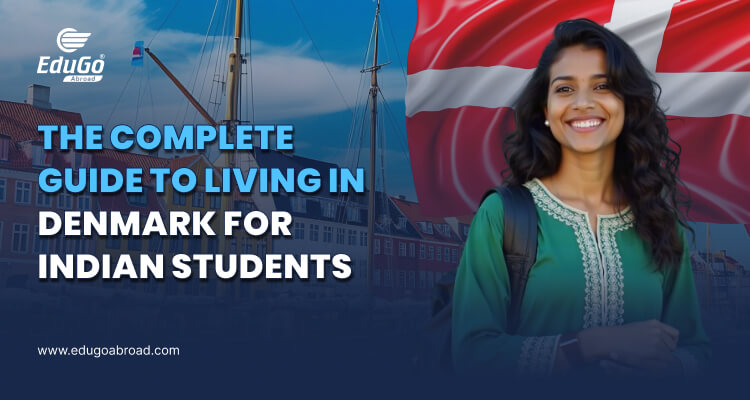
The Complete Guide to Living in Denmark for Indian Students

Moving to Denmark for higher education means preparing for more than university admission. Indian students also need to understand accommodation, monthly expenses, transport, healthcare, work rules, registration, and everyday life. This Indian students living in Denmark guide explains the practical side of moving to Denmark, making students’ journey smooth and transparent.
What Is It Like for Indian Students to Live in Denmark?
Denmark offers an international environment where Indian students can comfortably use English in their daily lives. Students get the option to choose from more than 500 English-taught programmes offered by Danish higher education institutions. However, they should also be prepared for a culture that values independence, punctuality, group work, and a relatively informal communication style.
For Indian Students, Some Noticeable Differences Includes:
- A strong cycling culture and extensive cycling infrastructure.
- Independent living and budgeting.
- Cold winters and distinct seasons.
- More informal communication in universities and workplaces.
- A practical, group-oriented approach to learning.
- A high reliance on digital public services.
Overall, adapting to life in Denmark can be a smooth experience for Indian students when they are prepared for the country’s climate, independent lifestyle, and everyday cultural norms.
Do Indian Students Need to Learn Danish?
No, Danish is not generally required to study in an English-taught programme in Denmark.
But in reality, this is the biggest question students face: “Do I need to learn Danish to study in Denmark?” And such questions running through their head didn’t help them make quicker decisions. But there’s no such specific requirement. The only thing students need to consider is that they must meet the English-language requirements of their chosen programme, while Danish-taught programmes have separate Danish requirements.
But...Learning Danish is still useful after arriving in Denmark because it can:
- Make everyday communication easier.
- Help students participate more confidently in local communities.
- Improve access to student jobs.
- Support employment opportunities after graduation.
Indian students living in Denmark can access Danish language courses, and Study in Denmark, the official site of the Danish Ministry of Science, Higher Education and Digital Affairs, recommends learning Danish to improve employment prospects.
And if you’re thinking of learning Danish anyway, that’s definitely a bonus. While you may not need it to study, knowing some Danish can make your experience in Denmark easier.
How Much Does It Cost to Live in Denmark as an Indian Student?
Denmark has a relatively high cost of living, so budgeting before arrival is important. Here are the official figures from Study in Denmark that Indian students should know:
| Expense | Approx. Monthly Cost |
|---|---|
| Rent | DKK 3,000–6,500 |
| Food | DKK 2,000–3,500 |
| Insurance | Around DKK 300 |
| Books & supplies | DKK 400–650 |
| Mobile phone | Around DKK 250 |
| Internet | Around DKK 250, if not included in rent |
| Transport | Around DKK 300 |
| Personal expenses | Around DKK 2,000 |
For residence-permit purposes, SIRI [Danish Agency for International Recruitment and Integration] states that students applying for higher education who have been granted a tuition waiver, they must document that they have been granted a scholarship covering their living expenses or that they have disposable funds corresponding to DKK 7,426 (2026 level) per month and will be studying in Denmark (for a maximum, however, of 12 months).
Important Note:
This is a financial-support requirement and should not be treated as an exact monthly living-cost estimate.
How Much Does Indian Student Accommodation Cost in Denmark?
As stated above, student accommodation or rent in Denmark can cost around DKK 3,000–6,500 per month, depending on the location, type of housing, and availability. For Indian students planning their cost of living in Denmark, accommodation is one of the main expenses to include in the monthly budget.
Danish universities generally do not follow the traditional on-campus housing model. Many students live in student halls of residence, rented rooms or shared apartments away from campus. Public transport makes it easier to commute between accommodation, university and the city centre.
Where Can Indian Students Find Student Accommodation in Denmark?
Start looking months before arrival, especially if you are moving to a larger city. Accommodation can become difficult to secure close to the August and September semester start.
Useful Danish Student Accommodation Tips Include:
- Contact your university as soon as you receive admission.
- Check whether the institution provides housing guidance.
- Compare student halls, rooms and shared apartments.
- Understand the rent, deposit, and other payment terms before signing.
- Do not travel without confirmed accommodation if housing is difficult to find in your destination city.
And if doing everything by yourself becomes tough, consult our Study in Denmark experts at EduGo Abroad and take your first free counselling call.
How Does Public Transportation Work for Students in Denmark?
Students can travel around Denmark by train, bus, metro, and ferry. Copenhagen also has a 24/7 automated metro system.
Cycling is another major part of everyday transport. For eligible students and young people, Ungdomskort can provide discounted public transport between home and the educational institution, along with discounts on other journeys.
For students trying to reduce the cost of living in Denmark, cycling for short daily journeys can be a practical option.
What Is Healthcare Like for Indian Students in Denmark?
Indian students staying in Denmark for more than three months generally need a Danish residence permit and Civil Registration System registration. Once registered, non-EU/EEA students are entitled to free medical treatment in Denmark, subject to the system's exceptions.
The Danish national health insurance card, known as the Sygesikringskort, confirms access to public healthcare and contains your CPR number and doctor details. Dental care and some other services can have different payment rules.
Can Indian Students Work Part-Time While Studying in Denmark?
For Indian students enrolled in state-approved higher education programmes, current SIRI rules allow them to work part-time under the following conditions:
| Period | Permitted Work |
|---|---|
| September–May | Up to 90 hours per month |
| June–August | Full-time |
Students should check the work conditions on their residence card and follow the permitted hours. Working beyond the authorised limit can lead to warnings, fines or residence-permit consequences.
A part-time job can provide work experience and help students build professional networks, but students should not depend on part-time income to fund their entire education and living expenses. Study in Denmark also notes that finding work can be harder without Danish language skills.
What Jobs Can Indian Students Find in Denmark?
International Students May Find Opportunities in Areas Such As:
- Restaurants and cafés
- Retail
- Telemarketing
- Jobs requiring specific language skills
- University or study-related positions
- Internships
The availability of jobs depends on your skills, location, experience, and language ability. Relevant work experience can also help build your CV and professional network.
But before getting into part-time work, you need to have enrolled in the course that suits your academic goals, career aspirations, matches your interests, and also fits the budget. If you are confused as to which course to pick and which university will be the best for you, here’s our Study in Denmark guide to check.
What Do Indian Students Need to Know About Everyday Life in Denmark?
Student life, weather, and culture can all feel different after moving from India. Denmark has four distinct seasons, including cold winters and warmer summers. Cycling and outdoor activities are common, while the Danish concept of hygge reflects a preference for relaxed, cosy social settings.
Universities also have international student communities, clubs and activities outside the classroom. Students should expect a more independent and collaborative learning environment than they may be used to.
What Should Indian Students Arrange Before Moving to Denmark?
Moving to Denmark involves more than securing admission and a visa. Indian students should take care of a few important practical arrangements before departure to make their transition to student life smoother.
Use This Checklist to Prepare for the Move:
- University admission and tuition documents
- Valid passport
- Danish residence permit
- Confirmed accommodation
- Proof of funds and financial arrangements
- Travel and important academic documents
- Copies of essential documents in digital and physical formats
- Appropriate winter clothing
- International payment method for initial expenses
- Emergency and university contact details
For Denmark student visa requirements from India, always check the latest requirements with SIRI and the relevant Danish authorities because documentation and procedures can change. Students also need to complete the applicable residence-permit process before moving to Denmark.
After arrival, securing your address and completing civil registration are important. A CPR number is used for everyday needs such as receiving salary, opening a Danish bank account, obtaining insurance, and accessing healthcare.
What Is a CPR Number and Why Do Students Need It?
A CPR number is a Danish civil registration number used to identify people who live in Denmark. CPR stands for Central Person Register. For Indian students staying in Denmark for more than three months, obtaining a CPR number is an important part of settling into everyday life. A permanent address in Denmark is required, and students from outside the EU/EEA must also have the relevant residence permit before they can be registered for a CPR number.
A CPR Number Is Needed for Many Everyday Activities, Including:
- Receiving a salary from a part-time job
- Opening a Danish bank account
- Getting insurance
- Visiting a doctor
- Managing tax-related matters
- Accessing Danish public services
After registering, students can also receive a Danish health insurance card, which displays their CPR number and GP details.
For Indian students: After arriving in Denmark, make CPR registration one of your early administrative priorities once you have your residence permit and a Danish address.
Can Indian Students Stay in Denmark After Graduation?
Yes, eligible graduates can have a period to look for employment in Denmark, but the exact conditions depend on the educational programme and residence-permit rules.
For graduates who have completed a qualifying professional bachelor's, bachelor's, master's or PhD programme at a Danish institution, SIRI states that a job-seeking residence permit of up to 3 years may be available. During this period, the normal limited work rights apply unless the graduate obtains the relevant permit for unrestricted work.
Students should check their individual post-study conditions before graduation rather than assuming every programme receives the same benefit.
What Are the Biggest Challenges for Indian Students Living in Denmark?
The main challenges are usually managing a high cost of living, finding accommodation, adjusting to the climate, understanding administrative processes, and finding suitable part-time work.
Planning early makes these challenges easier to manage. Build your budget before departure, arrange accommodation well in advance, learn basic Danish, understand your work-hour limit, and complete your CPR registration after arrival.
For students considering Denmark, the key is to understand the practical requirements alongside the academic options. EduGo Abroad can help you compare suitable universities and courses, understand the application process, prepare your documentation, and plan your Denmark study journey.
Planning to study in Denmark? Book a free consultation with EduGo Abroad to discuss your course, university, application, and student visa requirements.
Frequently Asked Questions (FAQs)
1How Much Does It Cost for an Indian Student to Live in Denmark?
The cost of living in Denmark for Indian students can vary depending on the city, accommodation, and lifestyle. Official student budget guidance estimates rent at around DKK 3,000–6,500 per month, food at DKK 2,000–3,500, transport at around DKK 300, and other personal expenses at around DKK 2,000 per month. Students should also budget for insurance, books, mobile phone, and internet costs.
2How Many Hours Can Indian Students Work in Denmark?
Indian students enrolled in a state-approved higher education programme can generally work up to 90 hours per month from September to May and full-time during June, July and August. Students should check the work conditions on their residence card, as rules can differ for certain programmes.
3Can Indian Students Find Indian Food in Denmark?
Yes. Indian students can find Indian restaurants and groceries in Denmark, particularly in larger cities. However, the availability and prices vary by location. Cooking at home can also help students manage their food budget.
4Do Indian Students Need to Learn Danish?
Indian students do not generally need Danish for admission to an English-taught programme. However, Danish is required for programmes taught in Danish, and learning the language can be useful for everyday communication and employment opportunities. International students can also take Danish lessons under the available arrangements.
5 What Is a CPR Number in Denmark?
A CPR number is Denmark’s civil registration number for people living in the country. Indian students staying for more than three months need it for essentials such as healthcare, banking, insurance, and receiving a salary. Non-EU/EEA students generally need a valid residence permit, passport, and Danish address to register.
Get A Free Consulting Today
Get your answers related to abroad study.
Read More
- Best 6 Student Cities Of France For Study Abroad Aspirant
- 12 Reasons To Study In Europe
- How To Find Jobs In France While Studying – A Definitive Guide
- Scholarships & Fully Funded Courses For Indian Students To Study In France 2022
- Intakes In France Open For Students In 2022 – A Detailed Guide
- Why Study Fashion & Luxury Management from France? A Definitive Guide
- How to Crack Campus France Interview? – An Ultimate Guide For Study Abroad Aspirants