Can Indian 3 Year Bachelor’s Degrees
Can Indian 3-Year Bachelor’s Degrees Get You Into a European Master’s Program?

Introduction
Getting into a Master's program in Europe has become one of the most popular choices among Indian students. The reason is simple. Europe offers world-class universities, industry-focused education, and excellent career opportunities after graduation.
However, one question often creates confusion: Can an Indian 3-year bachelor's degree qualify you for a master's program in Europe?
The answer is yes, but it depends on the country, the university, and the programme you choose.
In this guide, we have explained how degree recognition works and which European countries commonly accept Indian 3-year bachelor's degrees. Let's take a closer look.
Does Europe Accept Indian 3-Year Bachelor's Degrees?
Yes, many European universities accept Indian 3-year bachelor's degrees for master's admissions. However, there is no single rule that applies across Europe.
Every university follows its own admission policy. While one institution may accept a 3-year bachelor's degree, another may require additional qualifications. Your eligibility depends on several factors, including:
- The country where you apply.
- The university's admission criteria.
- Your bachelor's programme and subjects studied.
- Your academic performance.
- The recognition of your previous qualification.
For example, Business Schools in countries like France often accept Indian students with 3-year degrees. Some universities in Ireland, Italy, Spain, and the Netherlands also consider eligible applicants. In Germany, admission depends on the university and programme requirements.
It is also important to remember that meeting the minimum eligibility criteria does not guarantee admission to a Master's program in Europe. Universities review your complete academic profile before making a decision.
Why Is Degree Duration Important
European universities compare previous education with their own academic system to get Indian students into a Master's program in Europe. This process helps them determine whether your qualification is suitable for a master's programme.
Many countries in Europe follow the Bologna Process. It sets common standards for higher education across participating European countries. Most bachelor's degrees include 180 ECTS credits over three years, while some specialised programmes require 240 ECTS credits over four years.
Indian bachelor's degrees also vary in structure. While many programmes are three years long, universities evaluate more than just the duration. They also consider:
- The curriculum you completed.
- The number of academic credits earned.
- The subjects you studied.
- Learning outcome.
- The reputation and recognition of your university.
This is the reason two students with the same degree may receive different admission decisions from different universities. The best approach is to review each university's admission requirements before applying.
European Countries Accepting Indian 3-Year Bachelor's Degrees
If you're planning to pursue a Master's program in Europe, it's important to know which countries commonly accept Indian 3-year bachelor's degrees.
The table below provides a general overview of popular study destinations and their admission practices.
| Country | Acceptance Status for Indian 3-Year Degrees | Key Conditions & Exceptions |
|---|---|---|
| France | Highly Accepted | Universally accepted across most public universities and Business Schools, backed by a mutual educational recognition agreement between India and France. |
| Germany | Widely Accepted (with conditions) |
Commonly accepted for BA, BSc, and BCA degrees. However, it depends on individual university autonomy, credit mapping (ECTS equivalence), and a mandatory APS Certificate India review.
Note: BCom degrees sometimes face limited acceptance without extra credits. |
| Ireland | Universally Accepted | Being an English-speaking country with a similar structure, Irish universities regularly accept 3-year Indian degrees for 1-year Master's programmes. |
| Sweden | Widely Accepted | Highly receptive to 3-year degrees, especially for fields aligned with innovation, sustainability, and IT. Applications are evaluated centrally via the University Admissions portal. |
| Netherlands | Conditionally Accepted | Research universities (WO) often demand a 4-year degree or a 3-year degree plus a preparatory pre-master's year. Conversely, Universities of Applied Sciences (HBO) are generally more flexible with 3-year degrees. |
| Finland | Widely Accepted | Accepted across major institutions, provided the specific credit distribution of your degree closely aligns with the prerequisites of the chosen Master's course. |
*Acceptance always depends on the university, programme, academic performance, and eligibility criteria.
What If Your Degree Doesn't Meet the Requirements
Not every university may accept your bachelor's degree for direct admission. However, that doesn't mean your dream of pursuing a Master's program in Europe won’t turn into reality. Many students have alternative pathways to become eligible.
Here Are Some Common Options:
1) Graduate Diploma
A graduate diploma can help strengthen your academic background. It also prepares you for master's-level study in your chosen field.
2) Pre-Master's Programmes
Many European universities offer pre-master's programmes for international students. These courses help you build the academic knowledge and skills needed before starting your master's degree.
3) Bridging Courses
Some universities provide bridging courses if you are missing specific subjects or academic credits. Completing these courses may help you meet the programme's entry requirements.
4) Apply to Universities with Flexible Entry Criteria
Admission policies vary across universities. While one institution may not accept your qualification, another may consider your academic profile, work experience, or relevant skills.
5) Choose Countries with Broader Recognition Policies
Some European countries have universities that are more flexible in evaluating international qualifications. Exploring different study destinations can increase your chances of securing admission to a Master's program in Europe.
Common Myths About Indian 3-Year Degrees
When students plan to study in Europe, there are moments of doubt as to whether their bachelor's will be a gateway to their Master’s degree.
And then they fall into the trap of misinformation. But not anymore. Here are some of the facts you need to know before applying to study in Europe.
Myth 1: Every European Country Follows the Same Admission Rules
Fact: Each country and university has its own eligibility criteria. There is no universal admission policy across Europe.
Myth 2: Only Engineering Graduates Can Pursue a Master’s Degree in Europe
Fact: Students from Commerce, Management, Science, Arts, Computer Applications, and several other disciplines can also apply for master's programmes.
Myth 3: A Higher Percentage Guarantees Admission
Fact: Good grades improve your chances, but universities also consider your academic background, English language proficiency, Statement of Purpose, work experience (if applicable), and programme suitability.
Your Path to a Master's program in Europe
An Indian bachelor's degree does not stop you from pursuing a Master's program in Europe. Many universities across France, Ireland, Spain, the Netherlands, and selected institutions in Germany accept eligible Indian graduates.
The key is choosing the right university. You must also meet the programme's admission requirements. Careful planning can improve your chances of success.
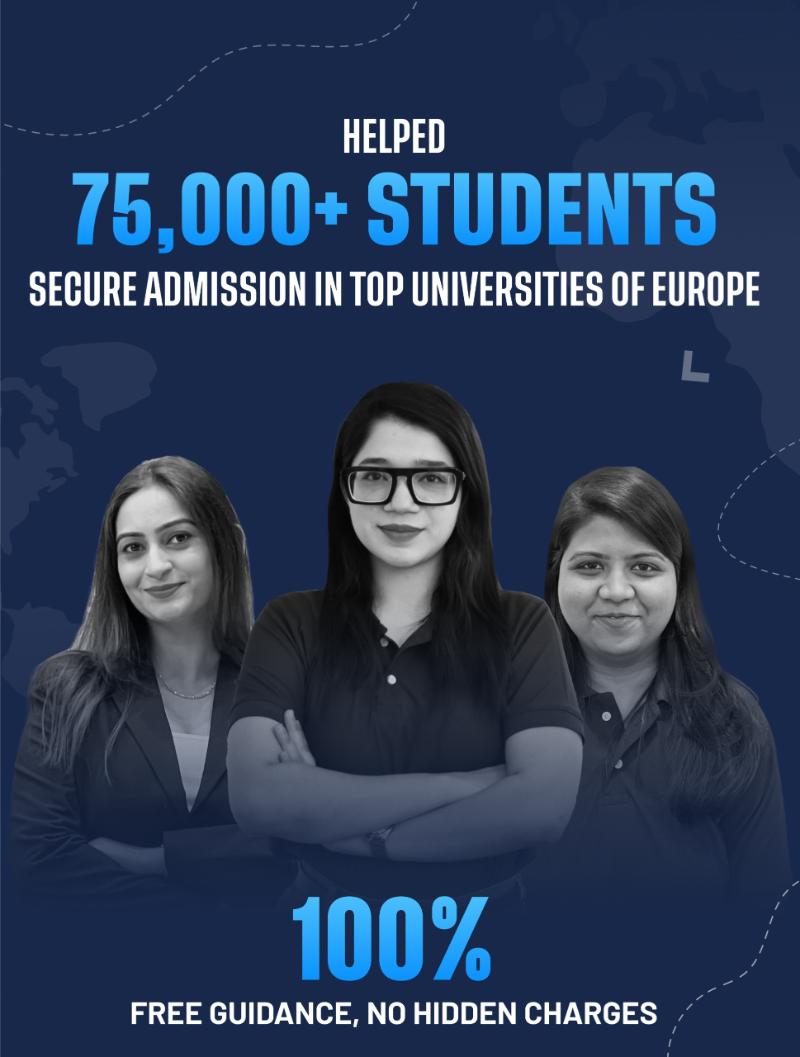
At EduGo Abroad, we help students find universities that match their academic profile and career goals. Our team supports you with university shortlisting, applications, and visa guidance.
If you are planning to pursue a Master's program in Europe, connect with our team for a personalised profile evaluation. We'll help you find the universities where your 3-year bachelor's degree can create new opportunities.
Frequently Asked Questions (FAQs)
1 Does Europe Accept a 3-Year Degree?
Yes. Many European universities accept Indian 3-year bachelor's degrees for admission to a Master's degree in Europe. However, acceptance depends on the country, the university, and the specific programme. Always check the university's admission requirements before applying.
2 Is an Indian Degree Valid in Europe?
Yes. Indian degrees are recognised by many European universities. However, recognition depends on the country, the university, and the programme. If you plan to pursue a Master's program in Europe, your eligibility will be assessed based on your academic qualifications, subjects studied, and the university's admission requirements.
3Which Is the Cheapest Country in Europe to Study?
Several European countries offer affordable higher education for international students. Countries such as Germany, Italy, France, and Spain are among the most budget-friendly options due to their low tuition fees, scholarships, and reasonable living costs. The most affordable destination for your Master's program in Europe depends on your chosen university, programme, and overall cost of living.
4Which European Country Is Easy to Get a Study Visa in?
There is no single European country that is the easiest to get a study visa for. Visa approval depends on factors such as your admission letter, financial documents, academic profile, and whether you meet the country's visa requirements. If you have a genuine admission offer and submit a complete application, obtaining a visa for a Master's program in Europe can be straightforward.
5 Which Are the Popular Courses Indian Students Pursue for a Master’s Degree in Europe?
Indian students pursue a wide range of programmes for a Master's degree in Europe. Some of the most popular courses include Business and Management, Data Science, Computer Science, Artificial Intelligence, Engineering, Finance, and International Business. The right course depends on your academic background and career goals.