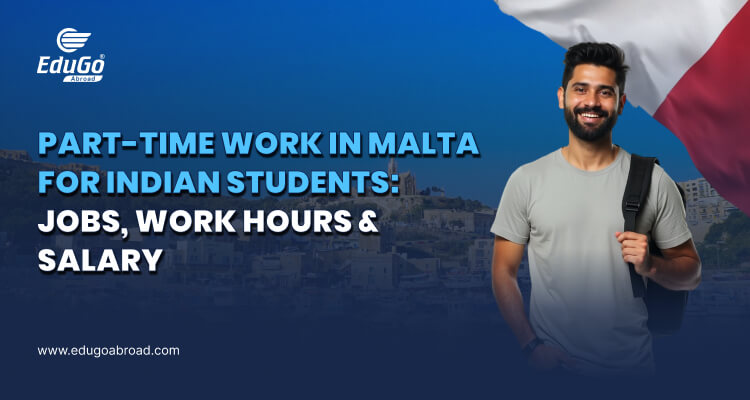
Part Time Work in Malta for Indian Students Jobs, Work Hours & Salary
Part-Time Work in Malta for Indian Students: Jobs, Work Hours & Salary

For Indian students planning to study in Malta, part-time work can be a way to gain local work experience and help cover everyday expenses. However, working while studying is subject to Malta’s immigration and employment rules.
Indian students need to understand their student residence conditions, the Malta student work permit, permissible working hours and employment rights before accepting a job.
This guide explains the rules around part-time work in Malta for Indian students, common student job options, salary expectations, where to look for work and what changes after graduation. So let’s get into it..!
Can Indian Students Work Part-Time in Malta
Yes, eligible Indian students can work part-time in Malta, subject to the conditions attached to their student status and the required Jobsplus employment licence for students.
For students covered by the relevant student employment provisions, the maximum permitted employment is 20 hours per week. Identità [ Malta’s government agency for visas and work permits ], states that students following certain courses exceeding 90 days may access employment after their first three months of study, subject to Jobsplus conditions.
It also states that third-country nationals, which means students from outside the EU pursuing a full-time higher-education qualification recognised by MQRIC [ Malta Qualifications Recognition Information Centre ] may take up employment for up to 20 hours per week from their first year of study, with the appropriate work permit.
| Key Point | Current Official Guidance |
|---|---|
| Student category | Eligible non-EU/third-country students |
| Maximum work | Up to 20 hours per week |
| Work authorisation | Jobsplus Employment Licence |
| Starting point | Depends on the applicable student/course category |
| Study requirement | Students must continue meeting their study and residence conditions |
Students should therefore check their individual permit conditions instead of relying on a generic “90-day rule”.
What Is a Jobsplus Employment Licence for Students in Malta
A Jobsplus employment licence is the work authorisation required for eligible third-country students who want to work in Malta while studying.
Jobsplus states that third-country nationals [studying in Malta] may work part-time when they are issued an Employment Licence. The application and supporting documents are submitted through the Jobsplus process, and the employment must subsequently be registered.
Before Starting a Job, Students Should:
- Confirm that their student status permits employment.
- Ensure the required Employment Licence has been issued.
- Check that the employer completes the required registration.
- Keep their residence and employment documents valid.
- Stay within the permitted weekly working hours.
Do not start working simply because an employer has offered you a job. Jobsplus states that Non-EU nationals require the relevant employment authorisation, and employers are responsible for ensuring that the worker holds a valid licence.
What Part-Time Jobs Are Available in Malta for Indian Students
The types of part-time jobs in Malta for Indian students depend on availability, previous experience, communication skills, study schedule and employer requirements.
Students May Come Across Opportunities in Areas Such As:
- Hospitality: Kitchen assistant, café staff and hotel support.
- Retail: Sales assistant, cashier and store assistant.
- Customer service: Call centre and customer support roles.
- Administration: Office support, reception and data-related work.
- Tourism: Visitor support and seasonal roles.
- Tutoring: Academic or language tutoring where the student has suitable skills.
- Internships and placements: Opportunities connected to a student's field of study, where permitted.
English can be useful for many customer-facing roles, while additional language skills or technical knowledge may help students qualify for more specialised positions.
The right job is not necessarily the one with the highest hourly pay. A role that fits around lectures and provides relevant experience can be more useful during a degree.
But before getting the right part-time job and building a portfolio, you need to be enrolled on the course that fits your career goals and budget. Here’s our detailed guide on Study in Malta: A Comprehensive Guide.
Check this out and know the universities and courses you can choose along with knowing the estimated cost of your overall education.
How Much Can Indian Students Earn From Part-Time Jobs in Malta
There is no single part-time job salary in Malta for Indian students, because pay depends on the sector, role, applicable Wage Regulation Order, experience and employer.
For 2026, Malta's Department for Industrial and Employment Relations lists a national minimum hourly rate of €5.74 for employees aged 18 and over where the national minimum applies. Part-time employees are paid on a pro-rata basis, while sector-specific minimum wages may apply in certain industries.
For example, 20 hours per week at €5.74 per hour would be approximately €497 gross per month, before applicable deductions. This is a calculation based on the national minimum hourly rate, not a typical or guaranteed student salary.
Malta's Tax and Customs Administration states that qualifying part-time employment income can be taxed at a final 10% rate up to €10,000 per year. Full-time students can qualify for this part-time tax treatment, subject to the applicable conditions.
Therefore, students should compare the gross salary, applicable tax and actual contracted hours before estimating how much they can contribute towards their monthly budget.
What Are the Best Part-Time Jobs in Malta for Indian Students
Instead of looking for one universally “best job”, students can match the role to their skills and academic schedule.
| Student Profile | Roles to Explore |
|---|---|
| No Previous Experience | Retail, hospitality, café and support roles |
| Strong Communication Skills | Customer service, reception, sales |
| Business Students | Sales, administration, customer support |
| IT or Technical Students | Technical support and relevant internships |
| Strong Academic Skills | Tutoring |
| Hospitality Students | Hotels, restaurants and tourism-related roles |
A course-related opportunity can also help students build experience that connects with their longer-term career plans.
Where Can Indian Students Find Part-Time Jobs in Malta
Students can use a combination of official employment channels, university resources and direct applications.
1. Jobsplus and Official Employment Resources
Jobsplus is Malta's public employment agency and an important starting point for understanding employment requirements and vacancies. Students should verify the work-authorisation process before accepting any position.
2. University and College Career Services
Check your institution's career office, student portal, noticeboards and employer events. These can be particularly useful for internships and roles related to your course.
3. Direct Employer Applications
Hotels, restaurants, retailers and other businesses may advertise positions directly. Prepare a concise CV in English and clearly state your availability around your class timetable.
4. Online Job Platforms
Students can also search reputable job portals and company career pages. Always verify the employer, job conditions and employment authorisation requirements before accepting an offer.
What Are the Working Rights of Part-Time Students in Malta
Part-time employment does not mean giving up normal employment protections.
Malta's DIER [ Department of Industrial and Employment Relations ] states that part-time employees are entitled to comparable employment benefits on a pro-rata basis, including statutory bonus, weekly allowance and applicable leave entitlements.
Students should also receive information about their employment conditions. Where the relevant conditions apply, the employer must provide a written contract or statement covering matters such as wages, working hours, probation, leave and the nature of the job.
Employers are also required to provide an itemised payslip showing details such as wages, hours worked and deductions.
Before Accepting a Job, Check:
- Hourly or monthly pay
- Expected working hours
- Job responsibilities
- Contract conditions
- Tax deductions
- Employment licence requirements
- Payslip arrangements
How Can Students Balance Part-Time Work and Studies in Malta
The legal maximum of 20 hours does not mean every student should work 20 hours.
Create your work schedule around your lectures, assignments, examinations and travel time. Students can consider:
- Choosing shifts that do not clash with classes.
- Keeping additional hours available during examination periods.
- Avoiding jobs with unpredictable schedules if attendance is difficult.
- Tracking total hours across multiple employers.
- Reviewing academic performance regularly.
Your student status depends on continuing your studies, so employment should remain secondary to your academic commitments.
What Should Indian Students Know Before Taking a Part-Time Job in Malta
Before accepting student jobs in Malta, remember these practical points:
Check your eligibility first: Your course and residence status determine whether and when you can work.
Get the required authorisation: Do not assume a student visa alone gives unrestricted employment rights. Identità states that work is subject to the relevant employment licence and conditions.
Understand your pay: Compare your offer with the applicable minimum or sectoral wage.
Keep records: Save your contract, payslips and employment documents.
Avoid cash-in-hand arrangements: If an employer suggests working without the required authorisation or registration, clarify the arrangement with Jobsplus before proceeding.
Treat part-time income as supplementary: It can contribute towards living expenses, but students should have sufficient financial planning for tuition and living costs without assuming that a job will immediately cover them.
Can Part-Time Work Lead to a Full-Time Job in Malta After Graduation
Part-time work can provide experience and professional contacts, but it does not automatically convert into full-time employment.
After successfully completing eligible studies, Indian students may apply for a post-study residence authorisation of up to 9 months to seek employment or establish a business related to their field of study, subject to the applicable conditions.
Identità also clarifies that the post-study permit itself is not a full-time work permit. Students who secure suitable employment need the appropriate employment status or permit before beginning full-time work.
This makes relevant work experience during your studies useful, but students should view it as experience rather than a guaranteed route to a job after graduation.
Making the Most of Part Time Work in Malta
Part-time work in Malta for Indian students can provide additional income, local experience and transferable workplace skills. The key is to understand the rules before accepting a job. Eligible Indian students can generally work up to 20 hours per week, but the exact starting conditions depend on their course and student status, and third-country students need the appropriate Jobsplus Employment Licence.
If you are planning to study in Malta, EduGo Abroad help you evaluate courses, understand admission requirements, prepare your application and plan your student journey.
Connect with EduGo Abroad Experts for personalised guidance and book a free 30-minute consultation to discuss your course and study-abroad options.
Frequently Asked Questions (FAQs)
1Can Indian Students Work Part-Time in Malta?
Yes. Eligible Indian students can work part-time subject to their student status, applicable conditions and the required Jobsplus Employment Licence.
2How Many Hours Can Indian Students Work in Malta?
Eligible students can generally work up to 20 hours per week under the applicable student employment provisions.
3Do Indian Students Need a Malta Student Work Permit?
Yes. Third-country students who work while studying require the relevant Employment Licence from Jobsplus.
4How Much Can Indian Students Earn in Malta?
There is no fixed student salary. For 2026, the national minimum hourly rate for workers aged 18 and over is €5.74 where the national minimum applies, while sectoral rates and actual job offers can differ.
5What Are Common Student Jobs in Malta?
Students may find opportunities in hospitality, retail, customer service, administration, tourism, tutoring and selected internships, depending on their skills and employer requirements.
6 Is Student Part-Time Income Taxed in Malta?
Qualifying full-time students can benefit from Malta's part-time tax rules, including a 10% final rate on qualifying employment income up to €10,000 annually, subject to the applicable conditions.
Get A Free Consulting Today
Get your answers related to abroad study.