
Can I Go to Germany After 12th Eligibility & Pathway Explained
Can I Go to Germany After 12th? | Eligibility & Pathway Explained
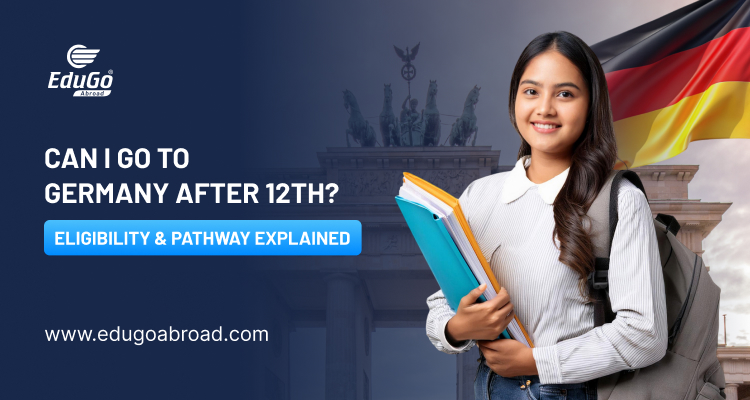
Yes, you can study in Germany after 12th. But the admission pathway you get into university after Class 12 depends on your academic history, the subjects you choose, and how well you speak English. Germany has a different way to structure educational institutions, which is why Indian students normally need to take a bridging course before they can start their bachelor's degree.
This blog explains how Indian students can move to Germany after 12th, what problems they can run into, and which possibilities are officially accepted.
Can Indian Students Study in Germany After Class 12?
Yes, Indian students can study in Germany after 12th, but they may not always be able to go into a public university directly to get a bachelor's degree because the education systems are different.
Germany has a 13-year educational system, whereas students in India only go to school for 12 years. Because of this difference, public colleges need academic equivalency.
Due to this, public schools frequently want: An extra certification for preparation, or Experience in higher education before
This is why getting into public universities in Germany after 12th can be hard and take a lot of time.
Private universities in Germany are set up differently for international students, especially those who are applying after Class 12.
- The requirements for admission are less strict than those for public universities.
- Many private institutions:
- Accept students after Class 12 (10+2) directly
- Recognise foundation or bachelor’s programs
- Provides English-taught programs
- Academic equivalence is assessed internally, reducing delays
What Are the Eligibility Requirements to Study in Germany After 12th?
Academic Requirements
- Completion of 12th (CBSE / ISC / State Board)
- Subjects must align with the chosen bachelor’s degree
Minimum Marks (Indicative)
- Public universities: 70–85%+
- Private universities: 55–65%+
Language Requirements
- German-taught programs
- TestDaF / DSH / Goethe (B1–C1)
- English-taught programs
- IELTS 6.0–6.5 or equivalent
Key Eligibility Advantage of Private Universities
- Study in Germany after 12th without complex academic barriers
- Study English-taught bachelor’s programs
- Accepts average to good academic scores
- 10+2 or 10+3 diplomas accepted
- TestAS not required
- German language not required
Which Pathways Are Available to Go to Germany After 12th?
| Pathway | Who It’s For | Duration | Outcome |
| Studienkolleg | Students who don't qualify for direct bachelor's degree | 1 year | Entry to public universities |
| Direct Bachelor’s | Students having a recognized academic background | 3–4 years | Bachelor’s degree |
| Foundation Program | Students wanting pathway | 1 year + degree | Bachelor’s degree |
What Are the Costs of Studying in Germany After 12th?
| Expense Category | Average Cost (annual) |
| Public university tuition | €0 – €1,500 |
| Private university tuition | €7,000 – €15,000 |
| Studienkolleg | €100 – €400/semester |
| Living expenses | €11,904 (blocked account) |
| Health insurance | €1,200 – €1,500 |
Which Universities Offer Bachelor’s Admission in Germany After 12th?
Several private universities in Germany are structured to accept international students directly after Class 12, especially from India. These universities follow international education models, making bachelor’s admission more accessible compared to public institutions.
1. FOM University
FOM University is one of the largest private universities in Germany, known for its strong focus on business, management, and applied sciences.
- Offers practice-oriented bachelor’s programs
- Accepts Indian students after 12th through recognised pathways
- Admission is based on:
- Academic profile
- Subject relevance
- Programs are suitable for students interested in:
- Business Administration
- Management
- Economics
Strong industry exposure through projects and applied learning
2. FHM University
FHM University (University of Applied Sciences) is known for its career-focused bachelor’s degrees designed for international students.
- Offers English-taught bachelor’s programs
- Flexible eligibility for students applying after Class 12
- Emphasis on:
- Practical training
- Internships
- Industry collaboration
- Popular study areas include:
- Business & Management
- Media & Communication
- Psychology
- Digital & Creative programs\
3. MDH University
MDH University of Applied Sciences is particularly popular among international students looking for English-taught programs in Germany.
- Offers bachelor’s programs in:
- Business
- Management
- Engineering
- Technology-related fields
- Accepts Class 12 (10+2) and 10+3 diploma holders
- Designed to support students transitioning from:
- Indian education system
- English-medium instruction
- Strong focus on:
- Applied learning
- International classroom environment
Which Courses Can I Study in Germany After 12th?
Indian students planning to study in Germany after 12th can choose from a wide range of bachelor’s degree programs, especially at private universities that offer flexible eligibility and English-taught options. Course availability depends on your academic background, subjects studied in Class 12, and chosen university type.
Below is a clear breakdown of the most popular and practical courses after 12th, aligned with current student demand and career outcomes.
Which Engineering & Technology Courses Are Available After 12th?
Engineering remains one of the most preferred options for students after Class 12, especially those with a science background.
Popular bachelor’s programs include:
- Mechanical Engineering
- Computer Science & IT
- Electrical & Electronics Engineering
- Mechatronics
- Automotive Engineering
- Data Science & Artificial Intelligence
- Software Engineering
Which Business & Management Courses Can I Study After 12th?
Business programs are among the most accessible courses at private universities in Germany, especially for students from commerce or arts backgrounds.
Popular bachelor’s programs include:
- Business Administration
- International Business
- Management Studies
- Finance & Accounting
- Marketing & Digital Marketing
- Entrepreneurship
Which Life Sciences & Health-Related Courses Are Available?
Students with a biology background can explore several life science and health-focused bachelor’s programs.
Popular bachelor’s programs include:
- Biotechnology
- Biomedical Sciences
- Life Sciences
- Environmental Science
- Public Health (select universities)
Which Creative, Media & Design Courses Can I Study?
Germany also offers growing opportunities in creative and digital fields, especially through private universities.
Popular bachelor’s programs include:
- Media & Communication
- Graphic Design
- Animation & Game Design
- UI/UX Design
- Film & Digital Media
Which Emerging & Specialized Courses Are Gaining Popularity in Germany?
Many private universities in Germany offer future-oriented bachelor’s programs designed for global careers.
Programs such as:
- International Relations
- Supply Chain & Logistics
- Sustainability & Environmental Management
- Business Analytics
- Hospitality & Tourism Management
How Does the Student Visa Process Work After 12th?
The German student visa process after 12th is structured and documentation-driven. Whether you apply to a public or private university in Germany, the visa steps remain largely the same.
Step 1: Secure Admission or a Recognised Pathway Offer
- Obtain an admission letter from:
- A German university (public or private), or
- A recognized preparatory/foundation pathway
- The offer letter must clearly mention:
- Course name
- Duration
- Mode of instruction
- This is mandatory for applying for a German student visa for Indian students
Step 2: Open a Blocked Account
- A blocked account in Germany is required to prove financial capability
- Minimum amount (indicative): €11,904 per year
- The amount covers:
- Living expenses
- Accommodation
- Daily costs in Germany
- Funds remain blocked and are released monthly after arrival
Step 4: Prepare Required Visa Documents
You will need to prepare a complete Germany student visa document checklist, including:
- Academic transcripts
- 10th & 12th marksheets
- 10th & 12th marksheets
- APS Certificate
- Mandatory for Indian students
- Mandatory for Indian students
- Language proof
- IELTS needed English-taught programs
- German language certificate (if applicable)
- Financial proof
- Confirmed blocked account
- Sponsorship documents (if any)
- Valid passport and photographs
Incomplete documentation is one of the top reasons for visa delays.
Step 5: Apply for the German Student Visa at VFS
- Book an appointment with VFS Global
- Submit:
- All original documents
- Biometric data
- Attend the visa interview (if required)
Processing time typically ranges from 6 to 12 weeks
Final Thoughts:
Yes, it is possible to study in Germany after 12th. The most important thing is to pick the proper path based on your educational history, the subjects you want to study, your budget, and your long-term ambitions.
After Class 12, Germany has different choices.
- Public institutions have tight rules for academic equivalence, and students frequently need to do more work to get ready for them.
- Private colleges are more flexible, provide programs taught in English, and make it easier for international students to get in.
There isn't one "best" choice. The appropriate decision relies on your background, your timeline, and how clear you are about what you want to study.
This is when good advice really matters. At Edugo Abroad, students are guided end to end, from profile evaluation and pathway selection to university shortlisting, admissions, visa support, and pre-departure planning. Instead of pushing one route for everyone, the focus stays on what actually works for the student.
If you’re serious about studying in Germany after 12th, start early, understand your options clearly, and choose a pathway that sets you up for life after graduation.